Sleep apnea treatment options
If you are officially diagnosed with sleep apnea, your healthcare provider will discuss treatment options for the specific type of sleep apnea you have. Treatment options can include a mixture of lifestyle changes, sleep devices and medications, or even surgical treatments. It may take a little time to get used to these changes in your routine, but ultimately, your sleep apnea treatment plan should have a positive impact on your sleep and improve your quality of life.
CPAP therapy
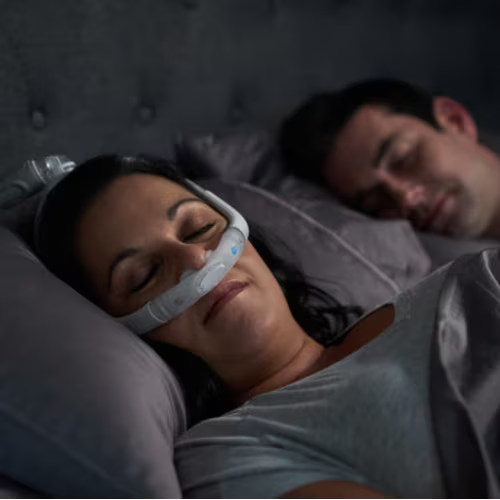
Continuous positive airway pressure (CPAP) therapy is highly effective and is the most used and understood method for treating sleep apnea.9 It involves a mask that fits over your nose and/or mouth and connects to a machine that pushes air through the mask. This flow of air is continuously delivered to your airway and helps prevent the stops and pauses in overnight breathing that sleep apnea can cause. In short, CPAP helps you breathe during the night, so you wake up feeling refreshed and well-rested.
Other airway pressure devices
Some people may have trouble getting used to CPAP. In those cases, auto-adjusting positive airway pressure (APAP) therapy allows the level of delivered air to adjust based on the person’s needs. It only delivers the amount of pressure needed at any given moment.
Lifestyle changes
Whether or not you have sleep apnea, lifestyle changes may benefit you. Your doctor may recommend you lose weight, cut down on alcohol or quit smoking to help improve your sleep apnea symptoms.
Oral appliance therapy
CPAP therapy is the gold standard for treating mild to moderate sleep apnea, although doctors may prescribe oral appliance therapy as an alternative option. An oral appliance, or a mandibular repositioning device (MRD), holds your lower jaw in a forward position while you sleep. A part of the device expands the space behind the tongue and puts tension on the walls of the throat to help keep the airway open and reduce palate vibration.
Medication changes
Your doctor may review your medications to determine if they’re contributing to your sleep apnea symptoms. Medications such as antihistamines, opiates and benzodiazepines for anxiety can exacerbate sleep apnea symptoms by causing the airway to relax and narrow.
Nasal decongestants
If you’re suffering from allergies or chronic nasal congestion, your doctor may prescribe nasal sprays or decongestants to help reduce swelling and open your airway.
Surgery
While surgery isn’t generally a first line of defence against sleep apnea, some surgical treatments are available.
For people with moderate to severe OSA who may not respond to CPAP or oral appliance therapy, another option is hypoglossal nerve stimulation (HGNS), also known as upper airway stimulation (UAS). This is an implantable therapy that is intended to help keep the airway open during sleep.10
Other less common surgical options include nasal surgery to fix a crooked or deviated septum, jaw surgery to change the position of the jaw, surgery to remove the tonsils or adenoids or somnoplasty, which uses radiofrequency to shrink the tissue in the upper airway.11